Rooftop Solar for Commercial & Industrial Consumers in India: The Complete 2026 Guide
Category
Rooftop Solar for Commercial & Industrial Consumers in India: The Complete 2026 Guide
Rooftop Solar for Commercial & Industrial Consumers in India: The Complete 2026 Guide_v3
Is rooftop solar worth it for a commercial or industrial facility in India?
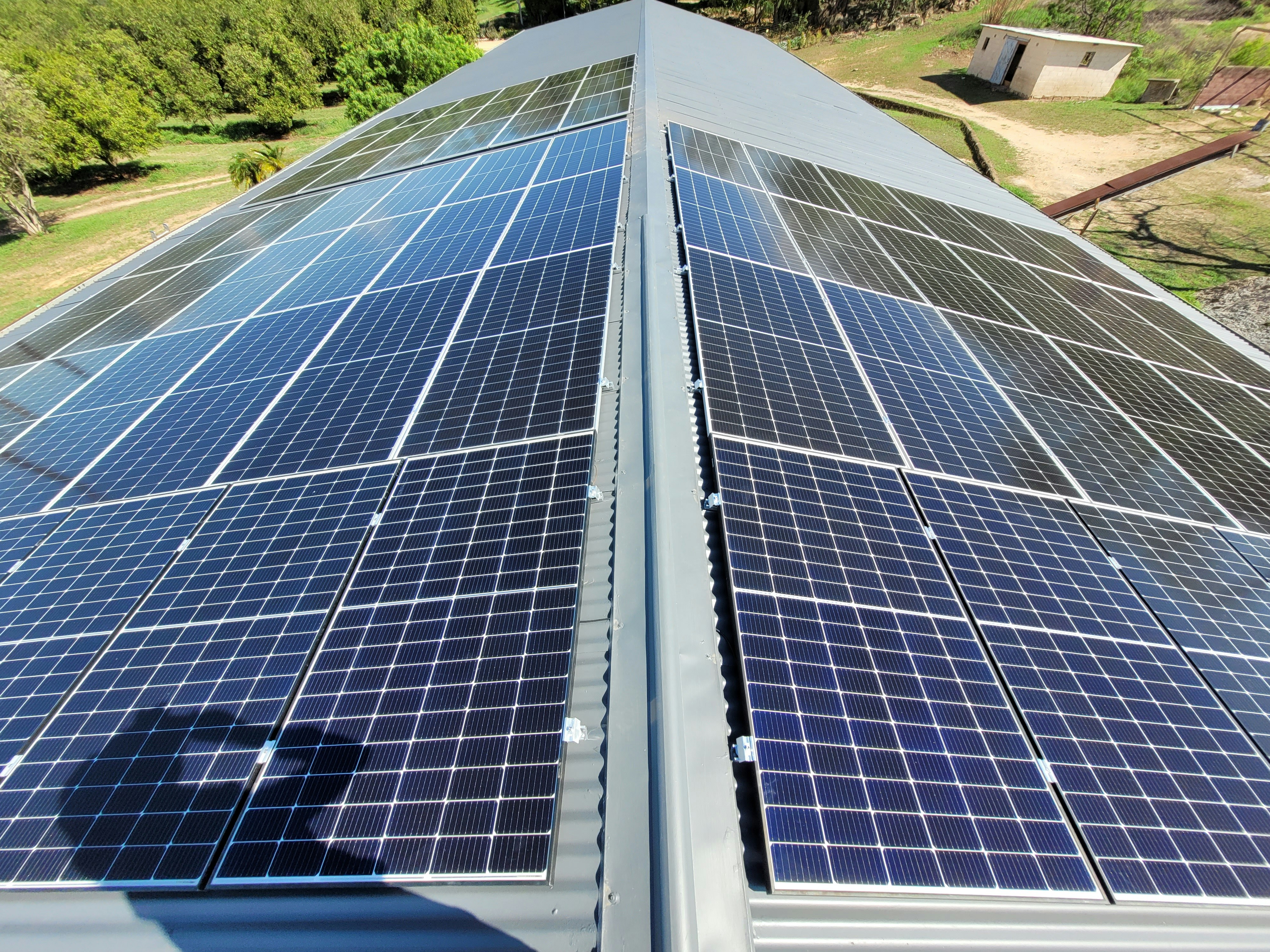
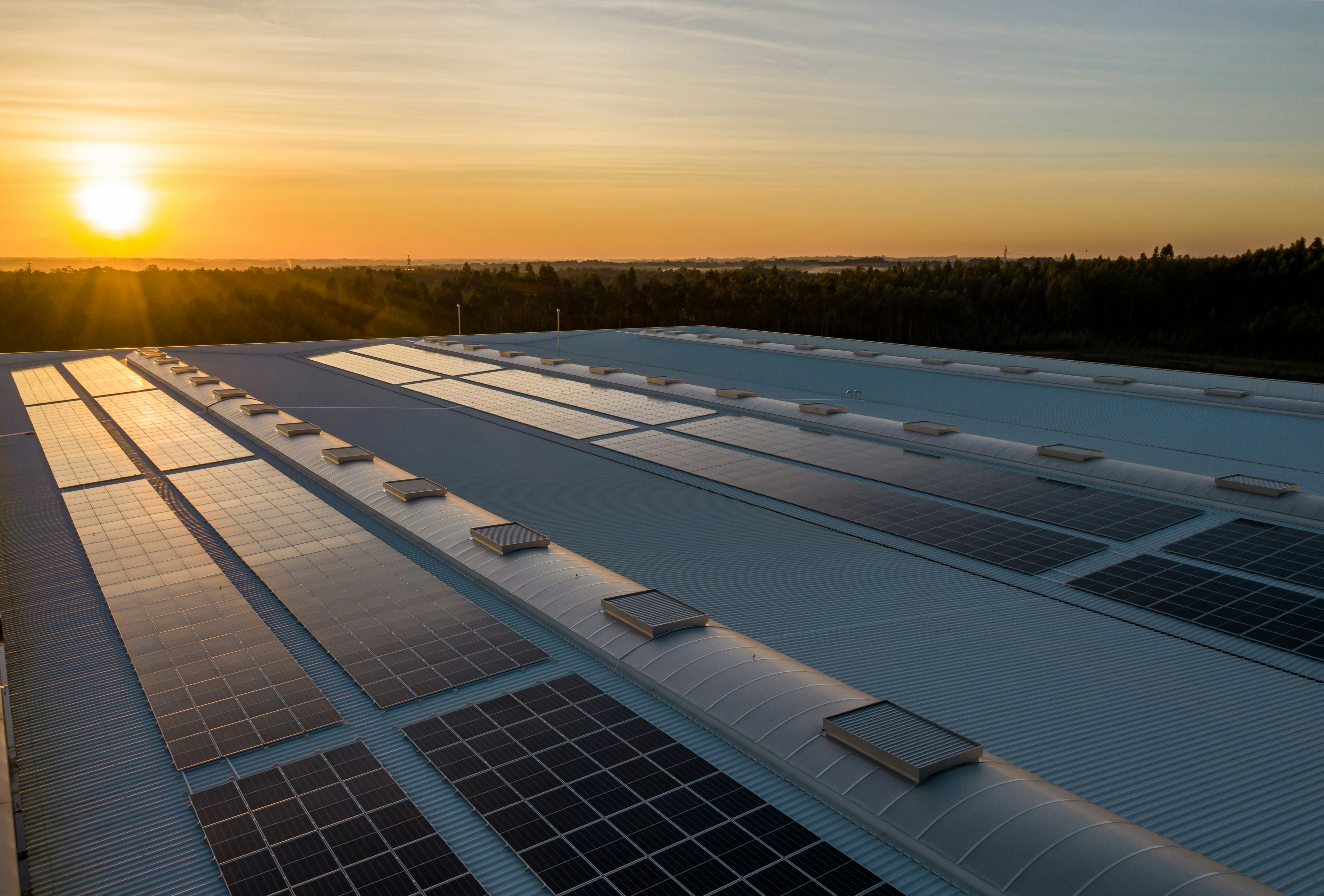
For most C&I facilities in India, yes. If your grid tariff sits above ₹7/kWh and you have shadow-free roof area, rooftop solar typically delivers a levelised cost of around Rs. 4 to 4.5 /kWh and pays back in 3.5 to 5 years on a CAPEX model. A-rated C&I consumers pay grid tariffs well above that, so every self-consumed unit is still a clear saving. The savings then run for another 20 years. The variables that decide whether your specific site clears that bar are your day-time load profile, your state's net metering rules and how much roof you can actually use.
That is the short answer. The rest of this guide gives you the math, the regulatory framework and the financing choices so you can size the decision for your plant.
Why C&I rooftop solar economics work in 2026
The case is simple. Commercial and industrial consumers pay the highest grid tariffs in the country, often ₹8-11/kWh including demand charges and fuel cost adjustments. Note that cross-subsidy surcharge (CSS) is not paid to a discom when you buy from the discom only. It is paid only when you buy power through open access on a non-captive route, for the power bought from that third-party source. Rooftop solar produces power at a fraction of the retail grid cost. Every unit you self-consume is a unit you do not buy from the discom.
Module prices are no longer falling in a straight line. ALMM capacity helped bring prices down over the last two years. The new ALCM regime now requires a domestically manufactured cell inside the module for eligible projects, and that has pushed module prices back up. Hardening commodity prices and geopolitical tension have added further pressure. None of this breaks the economics of rooftop solar. It simply means the days of assuming prices only fall are over, and locking pricing early matters more than it did.
The market signal is real. Ashok Leyland recently took its EV factory green with rooftop solar (Mercom India), and the pattern across the sector is consistent: serious manufacturers start on the roof, then grow off-site as demand rises.
What rooftop solar ROI looks like in India
Here is the way to frame the return without spreadsheets.
System cost: A typical C&I rooftop system runs ₹3.5-4.5 crore per MW installed, depending on roof type, structure and module choice.
Generation: Expect 1,400 to 1,600 units per kW per year in most of India.
Tariff displaced: If you displace grid power at ₹9/kWh, a 1 MW system generating 15 lakh units a year saves roughly ₹1.3 crore annually.
Payback: On CAPEX, that is a 3.5 to 4.5 year payback, then two decades of near-free power.
The single biggest swing factor is self-consumption. A system you consume entirely behind the meter earns the full retail tariff. Size the plant to your day-time base load, not your peak.
Net metering policy India: the rule that changes your math
Net metering lets you offset grid imports with exported solar, billed at retail rates. Net billing and gross metering pay you a lower feed-in rate for exports. The difference between these regimes can move your payback by a year or more.
Net metering is not a penalty. It lets surplus generation be adjusted against your overall consumption, which is useful for companies with a non-constant load. The trade-off is the cap. Many states limit net metering capacity as a function of your contract demand, and some impose a hard absolute number. Behind the meter, by contrast, requires that all generation is consumed instantaneously. For an industry whose consumption far exceeds its generation, behind the meter works cleanly. For a site with variable load, net metering smooths the mismatch. Read your state's specific order before you size the plant.
The regulatory direction is loosening in places. The Maharashtra Electricity Regulatory Commission recently allowed net metering alongside open access for a rooftop solar project (Mercom India). That matters because it lets a consumer use the roof and the open access route together, rather than choosing one. Watch whether your state regulator follows.
CAPEX vs OPEX: how to finance it
The rooftop solar CAPEX OPEX model choice decides who owns the asset and who carries the risk.
CAPEX model
You fund the system, own it and keep all the savings. Best return on investment, fastest payback, and you book the accelerated depreciation benefit. The trade-off is upfront capital and the responsibility for operations and maintenance. This suits balance-sheet-strong companies that want the lowest long-run cost per unit.
OPEX model
A developer funds, owns and maintains the system on your roof. You sign a power purchase agreement and pay a fixed ₹/kWh, usually 20-30% below your grid tariff, for 15 to 25 years. Zero upfront cost. You trade some lifetime savings for no capital outlay and no O&M headache. Getting a competitive tariff quote under OPEX requires a strong credit rating from the consumer, because the developer is financing a 15 to 25 year asset against your offtake.
Financing, not technology, is now the binding constraint on rooftop growth. The sector view is that India's rooftop solar growth hinges on financing and execution (Mercom India). Developers are responding with new capital structures, including a $125 million revolving credit facility raised by Solar Landscape (Mercom India).
A practical rule: if your cost of capital is low and you intend to stay in the building, CAPEX wins on total economics. If capital is scarce or the lease is uncertain, OPEX de-risks the decision, provided your credit profile earns a sharp tariff.
DCR content, ALMM and ALCM: the procurement rules
Three acronyms drive your hardware choice and cost.
ALMM (Approved List of Models and Manufacturers) governs which solar modules are eligible for many government-linked schemes. Panels with DCR content (Domestic Content Requirement) are mandatory where you want certain subsidies or net metering benefits tied to local manufacturing. DCR modules can cost a premium, so confirm whether your scheme actually requires them before paying for them.
The newer development is the ALCM notification, the Approved List of Cell Manufacturers, which extends the domestic content logic from modules to the cells inside them. ALCM has been implemented, effective 01 June 2026, and it has had an effect on prices. The change due to the ALCM notification is that eligible projects now need domestically manufactured cells, not just domestically assembled modules. This tightens the supply chain and has moved pricing in the near term. If you are procuring this year, ask your EPC contractor in writing which list each component sits on and what it costs you.
Behind the meter options and the BESS question
Behind the meter (BTM) simply means the solar sits on your side of the discom meter and serves your load directly. This is the highest-value configuration because every unit displaces expensive retail power before it ever touches the grid.
The limit of solar alone is that it stops at sunset. If you run multiple shifts or face high evening demand charges, integration of BESS (battery energy storage) lets you store mid-day surplus and discharge it when grid power is most expensive. Battery economics are improving fast. UPERC recently approved 320 MWh of battery storage procurement without any capital subsidy (Mercom India), and the wider conversation has shifted from chasing the lowest tariff to building scale (Mercom India). Storage is moving from subsidy-dependent to commercially viable.
For most C&I sites in 2026, the right sequence is solar first, then size storage against your specific demand-charge and shift pattern, not the other way around.
From rooftop to open access: the growth path
Your roof has a hard limit. Once you have filled it, the next units come from off-site capacity. The natural sequence is to install rooftop, and then if consumption still remains, grow into group captive open access. Plan the roof as the first 10-20% of your renewable supply, not the whole answer.
What to do this week
Pull your last twelve months of electricity bills and extract these numbers: your average ₹/kWh including all charges, your consumption split across Time of Day (TOD) blocks as per your state's regulations and your sanctioned load. Then measure your shadow-free roof area. With those data points, a credible developer can give you an indicative payback in a day. If your blended tariff is above ₹7/kWh and your day-time load is high, you almost certainly clear the investment bar. The next step is checking your state's net metering order before you size anything.
FAQ
Is rooftop solar worth it for a commercial or industrial facility in India?
In most cases yes. Facilities paying above ₹7/kWh with adequate shadow-free roof and high day-time consumption typically see a 3.5 to 5 year payback on CAPEX, followed by two decades of low-cost power.
What is the difference between the CAPEX and OPEX rooftop solar model?
Under CAPEX you own the system, fund it upfront and keep all savings plus depreciation benefits. Under OPEX a developer owns and maintains it, and you buy the power at a fixed discounted rate with no upfront cost. A competitive OPEX tariff depends on a strong consumer credit rating.
How does net metering affect my rooftop solar returns?
Net metering offsets grid imports at retail rates and adjusts surplus generation against your overall consumption, which helps sites with variable load. It comes with capacity caps tied to contract demand in many states, or a hard absolute limit in others. Behind the meter requires instantaneous consumption of all generation, which suits sites where load far exceeds generation.
What are DCR, ALMM and the ALCM notification?
ALMM lists approved module manufacturers. DCR requires domestically made content for certain subsidies. The ALCM notification extends domestic content requirements down to solar cells. It has been implemented effective 01 June 2026 and has pushed module prices up in the near term.
Do I need battery storage with rooftop solar?
Not always. Solar alone serves day-time load well. Add BESS only if you run multiple shifts or face high evening demand charges, and size it against your specific load pattern rather than as a default.
What happens when I run out of roof space?
You move to off-site capacity, typically group captive open access. Treat the roof as the first slice of your renewable supply, then scale from there.